Step 1 — Compare Platforms Fast
What to do:
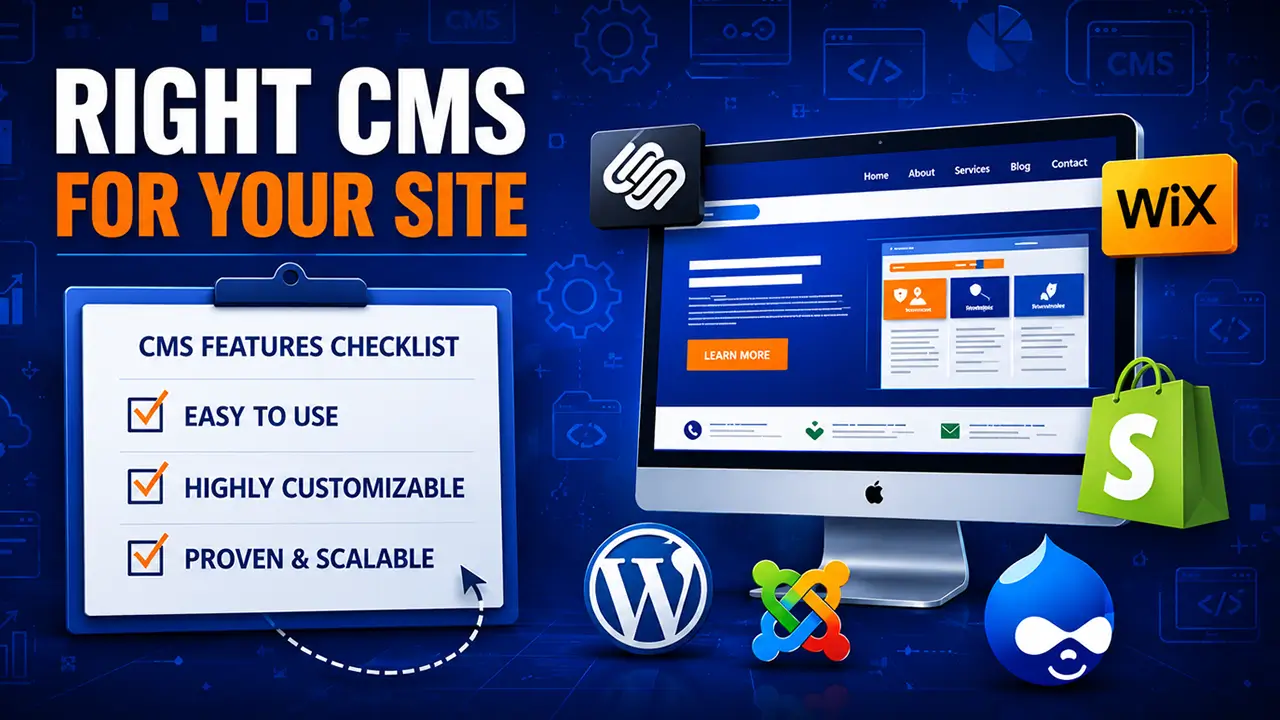
List your site goals, then compare WordPress, Shopify, Wix, and others for SEO, cost, ownership, and easy fit.
Why it matters:
The right CMS keeps content organized, loads fast, ranks better on Google, and saves your team hours each week.
How to apply it today:
Write three must-haves: blog, store, or courses. Use a simple scorecard for SEO tools, mobile speed, templates, and integrations. Pick one platform to test with a free trial this afternoon.
Step 2 — Build With Templates
What to do:
Choose a clean template, use a drag-and-drop builder, and set user roles so updates stay consistent for everyone.
Why it matters:
Templates speed your launch, and roles prevent messy edits, keeping your site polished, secure, and easy to manage daily, safely.
How to apply it today:
In your CMS, install one starter template, then create Home, About, Services, and Contact pages. Assign Editor access to staff, keep Admin for one person, and publish one page today.
Step 3 — Connect Growth Tools
What to do:
Integrate your CMS with a CRM, add video and social tools, and track leads from forms directly inside.
Why it matters:
Integrations turn your website into a follow-up system, helping you reply faster, nurture contacts, and grow sales steadily over time.
How to apply it today:
Install a CRM plugin like HubSpot, connect your contact form, and test one lead capture. Add a scheduler plugin and embed one video on a page, then review the results.
Check One Result After Implementation
Ensure that you can view your core pages in one chosen system on a template, and a test form message is saved.
Write it down, then recheck after a few days and note any changes.