Introduction
Website architecture is the backbone of growth online. Plan early to map clear pages and paths that scale with your business. Use clear names and simple rules. Group content by topic and purpose. A solid plan helps teams ship faster and scale with less rework overhead.
Solid website plans reduce friction and boost SEO. Clear paths help people find answers fast. Name sections well. Add pages in steps and keep rules simple. Next, shape navigation with a hierarchical website structure inside a strong website architecture.
Building a Hierarchical Website Structure for Growth
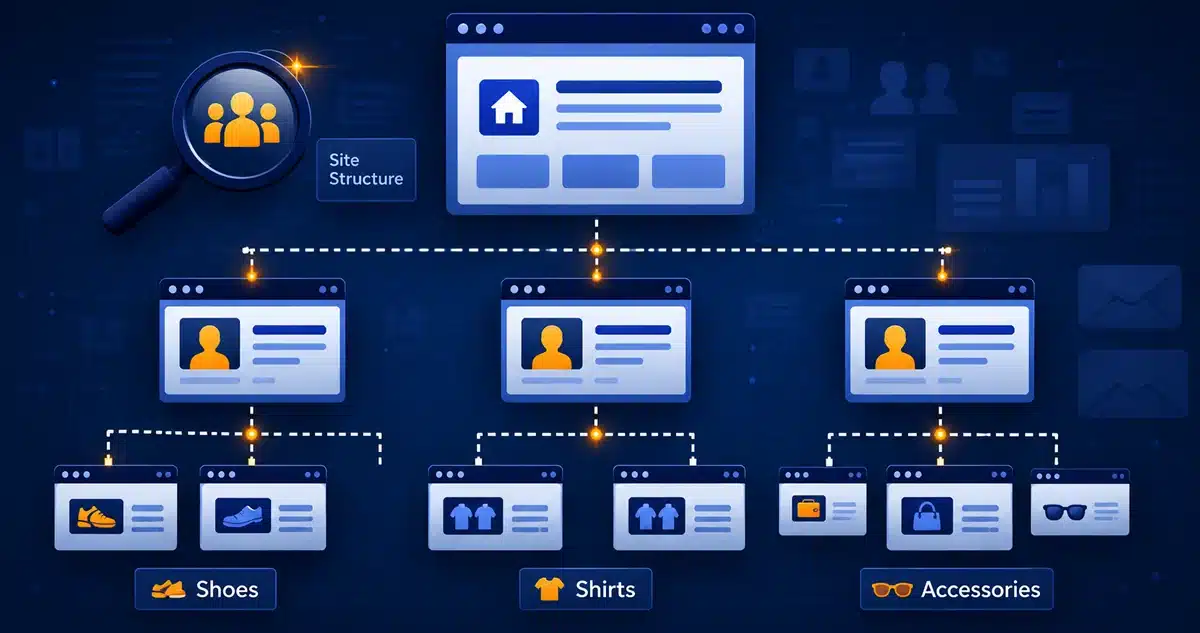
A hierarchical website structure matters in website architecture. Clear parent and child pages guide users and search bots. Pair simple names with a responsive site layout to cut confusion. Fewer clicks, cleaner paths make growth easier.
Picture an online store. The main pages feature Men, Women, and Kids products. Under each, categories such as shirts, shoes, and accessories are organised. Each product page links back to its parent category, keeping navigation clear. The structure stays steady as new product lines launch, letting teams build pages without breaking the flow.
Clear page groupings make a site grow with ease. Visitors scan parent pages, then move into details without guessing. Teams place new product lines under the right parent. Search engines follow the map and send value to key pages. With fewer dead ends, visits get better.
Keep names easy, pages clear, and rules short. Add breadcrumbs, simple menus, and links on each page. Update the page tree each month as new lines show up. Then connect these groups with an internal linking structure that guides users to the right places.
Strengthening Navigation with Internal Linking Structure

In website architecture, links act like roads. Hub pages point to detail pages. Keep paths short—two or three clicks. Use clear anchor text (like “Pricing,” not “Click here”). One simple linking rule keeps people and search bots on track.
Post a new article each month. Use an internal linking structure that connects each article to its parent page. Plan routes with a website structure template so pages fit in neatly. This setup stops broken paths between hubs.
This setup lowers bounce rates and makes pages clearer. People reach key pages and complete tasks faster. Search engines pass value to hubs. In website architecture, clear links, anchors, and concise routes keep meaning and reduce guesswork for teams.
Keep links relevant, prune weak paths, and refresh anchors as content grows. Review hubs each month. Check how users click from articles to categories and compare. Share a map with owners. Next, map tasks and labels to support step-by-step information flow.
Enhancing Usability Through Information Flow

Information flow is how facts move across your site. A clear map links pages, sets orders, and gives cues. Pair it with a hierarchical website structure so people know where they are and what comes next.
Picture a SaaS signup that moves to setup, then to a dashboard. The flow of information reveals the next step, with help within reach. Use a website folder structure that mirrors the path. This ensures that content and menus align with user expectations.
Clear steps help users complete tasks more efficiently and return more frequently. Labels match intent and guide users at each step. With solid website architecture, teams ship features that align with the map. They maintain a steady flow while people learn easily.
As content grows, update the site map. Have users test paths and fix weak spots right away. Record rules for names and placement. Next, move on to planning how to scale teams, content, and features without chaos.
Designing Website Architecture for Future Scalability

Plan for growth from day one. Choose rules that scale: names, paths, and owners. Use stable categories and leave room for new lines of development. Keep depth shallow so pages slot in easily as teams ship features.
Design handoffs that keep meaning intact. An internal linking structure directs users from hubs to specific pages and back again. Map links before launches. Set clear anchors for paths. This prep avoids patches when new pages arrive.
Keep data moving in the correct order. Good information flow shows what comes next on each page. Add cues, help, and breadcrumbs. That way, teams add steps without breaking journeys. Users complete tasks faster, and support receives fewer tickets.
Make rules clear for names, URLs, and web menu design. Track owners. Document how to add, move, or retire pages. Plan capacity, caching, and monitoring. Next, focus on performance to keep growth steady over time.
Optimizing Performance Within Strong Website Architecture

Site architecture is necessary for improving performance. Plan fast paths, small files, and clean code. Measure website load time on real phones. Cache assets and compress images. Use simple layouts. Remove scripts that are not needed. Track errors and fix them as quickly as possible.
Use a content delivery network and caching. Move images and video off the central server to cut traffic load. Add website load balancing to spread requests during spikes. One store reduced load time by half after routing images to a content delivery network and tuning page cache rules.
Faster pages raise focus and trust. Clear paths work better with speed in place. With information flow set well, people move step by step without stalls. Search engines see clear signs of structure and speed. Conversions rise as wait times drop and errors reduce.
Make improving performance a habit. Set owners, dashboards, and a review rhythm. Tie fixes to the website architecture so gains last. Run tests, record wins, and retire slow code. Keep pages light, menus clear, and journeys short. Close sprints and repeat.
Frequently Asked Questions
How does a responsive site layout help users?
It fits any screen, keeps text readable, and makes buttons easy to tap. People complete tasks more efficiently with fewer errors and fewer help requests.
Why use a website structure template?
It sets clear names and paths. New pages fit in the map, and teams avoid broken links, so work is faster and users find what they need.
How does website folder structure help teams?
It mirrors the site map, so files are stored in the right places. Editors find assets fast, and changes roll out smoothly, with fewer mistakes and simpler upkeep over time.
How does web menu design improve navigation?
Use plain labels and short menus. Place key links first and keep the same order across pages. People learn the pattern fast and reach goals without mistakes.
Why does website load time matter to results?
Slow pages lose visitors, but fast pages lift conversions. Search engines reward speed. Faster sites help ads, email, and social traffic perform better across the funnel over time.
When should a team add website load balancing?
Use it when traffic spikes or varies by region. It spreads requests so servers stay stable. Pages keep loading reliably. Users stay online, and sales hold.
Conclusion
Website architecture drives growth and better SEO. It links pages and names so people find answers fast. Start with a map, then test and improve. Small changes stack and keep teams aligned as content grows.
Treat it as a long-term plan, not a quick fix. Use a hierarchical website structure to organize topics and guide steps. Review monthly, add features that help users, and keep labels simple so changes remain straightforward.
Build Strong Website Architecture Now
Let The Strategic Tech help you design, test, and scale your site. We’ll create a clear architectural plan that supports long-term growth. With an internal linking structure, users find key pages fast. We’ll boost speed, track wins weekly, and keep your site running smoothly. Start today and see lasting results with website architecture that grows with your business. Request your site architecture plan now.