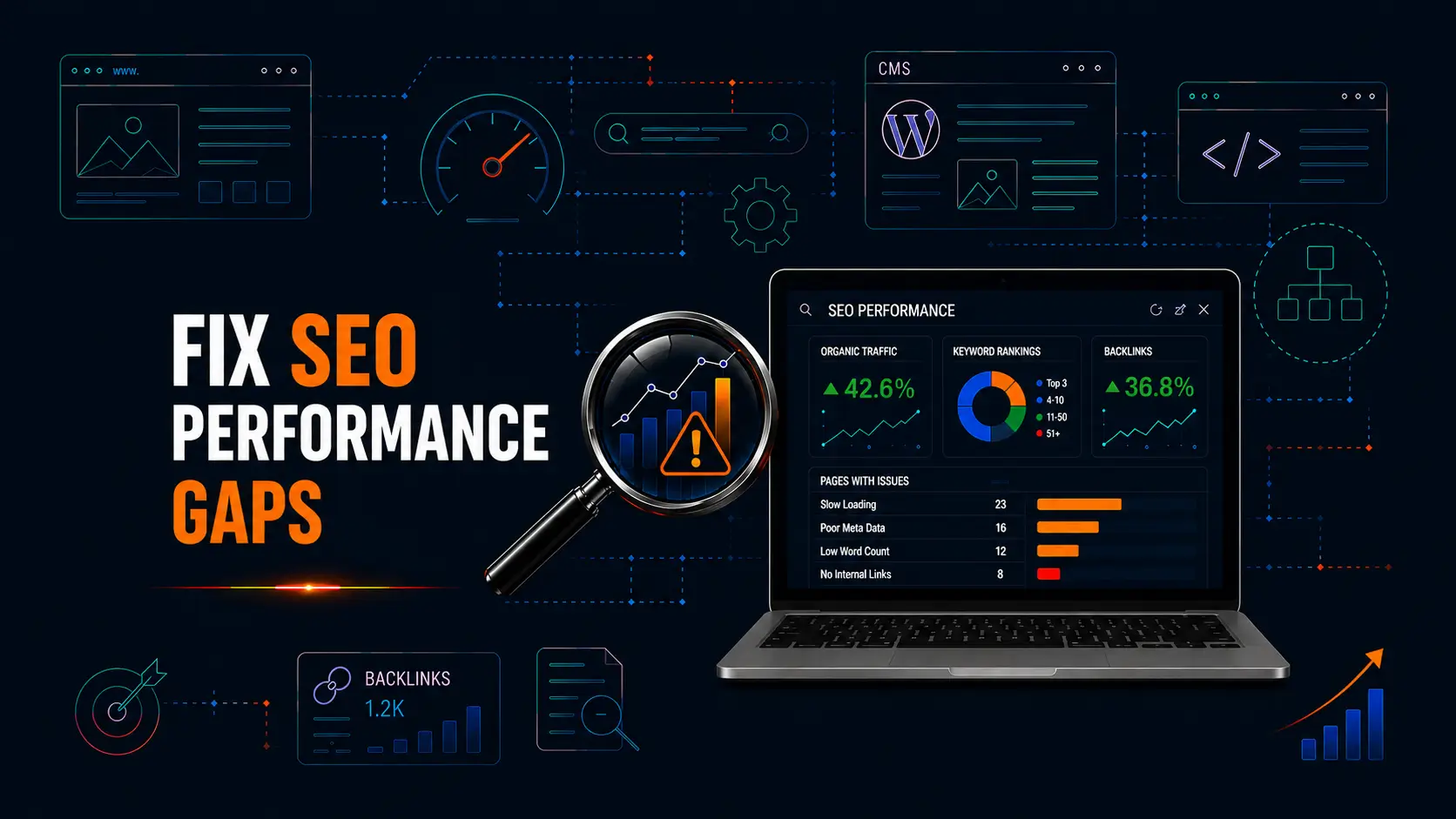
Step 1 — Test Page Speed
What to do:
Run a website speed analysis on key pages using PageSpeed Insights or a page speed checker.
Why it matters:
Fast load times cut bounce rates, keep users engaged, and help search engines rank you higher.
How to apply it today:
Pick your top three traffic pages, run one test on mobile and desktop, then list the top two fixes, like image compression and caching, and apply them today.
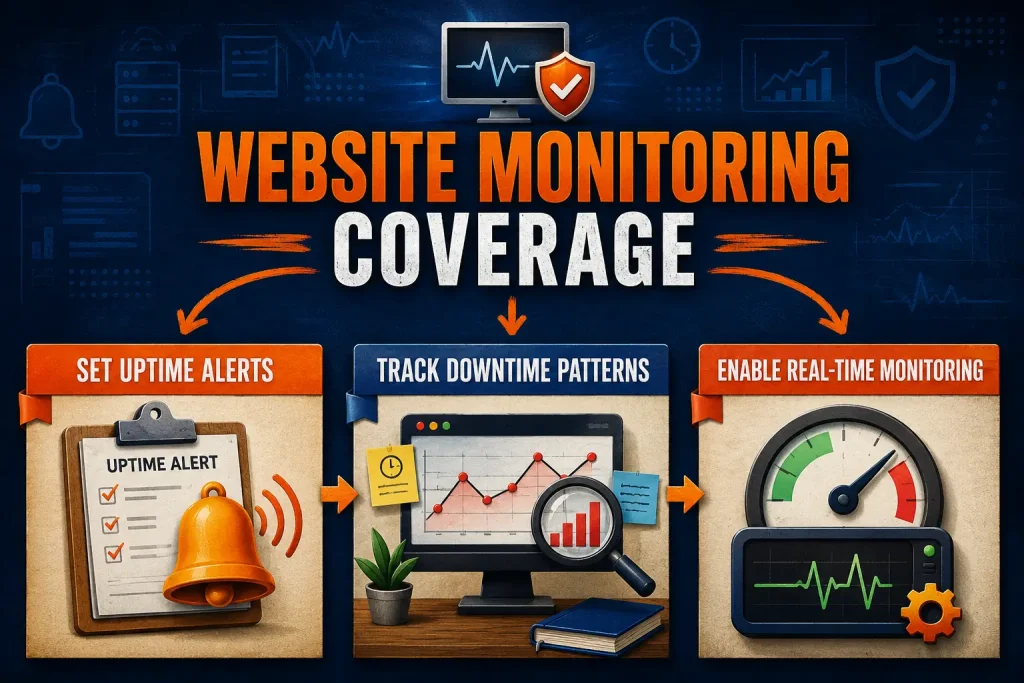
Step 2 — Set Monitoring Alerts
What to do:
Turn on website performance monitoring and alerts to catch slowdowns, downtime, and errors fast.
Why it matters:
Real-time alerts let you fix issues early, protecting rankings, traffic, and customer trust.
How to apply it today:
Choose one tool, set a speed and uptime threshold, and get email alerts. When an alert hits, re-test the page, then roll back the last change.
Step 3 — Track Key Metrics
What to do:
Review technical metrics like TTFB, mobile speed, and load time during every SEO performance check.
Why it matters:
Clean metrics make pages easier to crawl, improve user experience, and lift visibility in search.
How to apply it today:
Open your report, find the slowest high-traffic page, and note what causes delays. Fix one item, then confirm the change with a fresh web performance test.
Check One Result After Implementation
Load the updated page and confirm it opens fast, stays stable, and shows no new error message.
Record the first load time once, then check again after 24–48 hours and note any change.