Introduction
CMS pricing transparency means spelling out the costs of setup, hosting, support, and migration in plain words. This enables you to prevent surprise bills, protect your budget, and plan ahead. You also stay focused and keep redesigns flowing with fewer delays.
With CMS pricing transparency, goals and budgets fit better. It makes choices clear and safe so that everyone can trust the process. It also helps you plan your budget, saves time, and allows for a smooth workflow. Let us begin with a CMS software comparison.
Make Smarter Picks With A CMS Software Comparison
Comparing CMS software is a way to check tools side by side. CMS pricing transparency lists each cost in clear words so that you can see fees, limits, and terms. This makes planning simple and reduces mistakes before redesigns even begin.
Test vendors with a short checklist. Compare contract length, plug-ins, and the type of CMS used. Write notes during trials. These notes give fair results. They help leaders choose the right option without guessing or rushing.
A CMS software comparison saves time and lowers risk. It enables your team to reach faster agreements and plan budgets with CMS pricing transparency. Clear choices also make the redesign work smoothly. This helps you avoid stress and finish projects on time.
Small pilot tests help you find which parts of the plan work best. Owners set tasks and review steps. Sharing quick reports keeps everyone ready. Let’s now explore content management system features. This helps reduce errors and cut extra rework.
Prioritize Content Management System Features That Cut Rework
CMS features lower work and cuts errors. Roles, steps, and shared blocks keep tasks easy. CMS pricing transparency shows how each part is linked to cost. Together, they guide safer redesigns and help you avoid wasting time and effort.
A group tested a headless WordPress to check models and handoffs. They tracked rebuild steps and saw where time was lost. These facts provided clear evidence before the team decided how to proceed.
Content management system features support clean launches and fewer fixes. With support, teams help with training and quick updates. It adds a second check, proving if tools really save hours and make work steady across the site.
Teams should write a short list and test tools. Simple notes show which features save the most. Quick reviews make choices safe. The next focus is CMS support, which protects uptime and reduces daily risks.
Plan Reliable Operations With CMS Support
Support means help with fixes, updates, and training. It keeps sites safe and steady for users. CMS pricing transparency shows what each support level costs. This makes planning clear and helps teams avoid surprise bills.
Support often includes upgrades, tests, and rollbacks. Teams should plan each CMS migration in steps. One team ran Drupal migrations with clear steps and set times. They also set backups so if something failed, they could switch back quickly.
CMS support cuts downtime and speeds up updates. Teams feel safe knowing help is quick. CMS pricing transparency adds a second check, proving if the plan is fair for the money. Together, both keep the site safe and easy to run.
Simple lists and weekly notes make support work better. Owners can track jobs and report fixes. This builds trust and keeps progress moving. The next step is to expose hidden costs before you commit.
Expose Hidden Costs Before You Commit
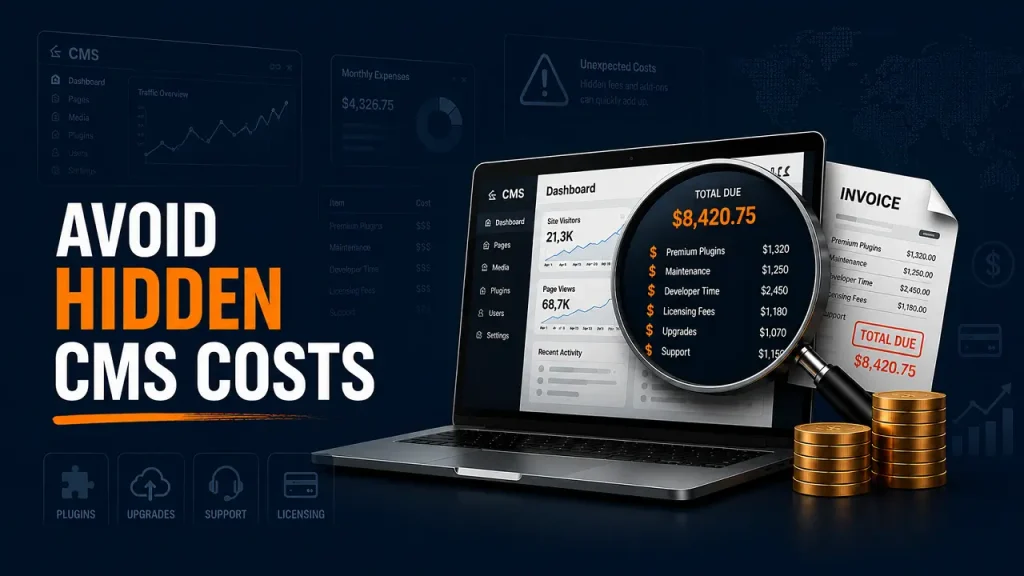
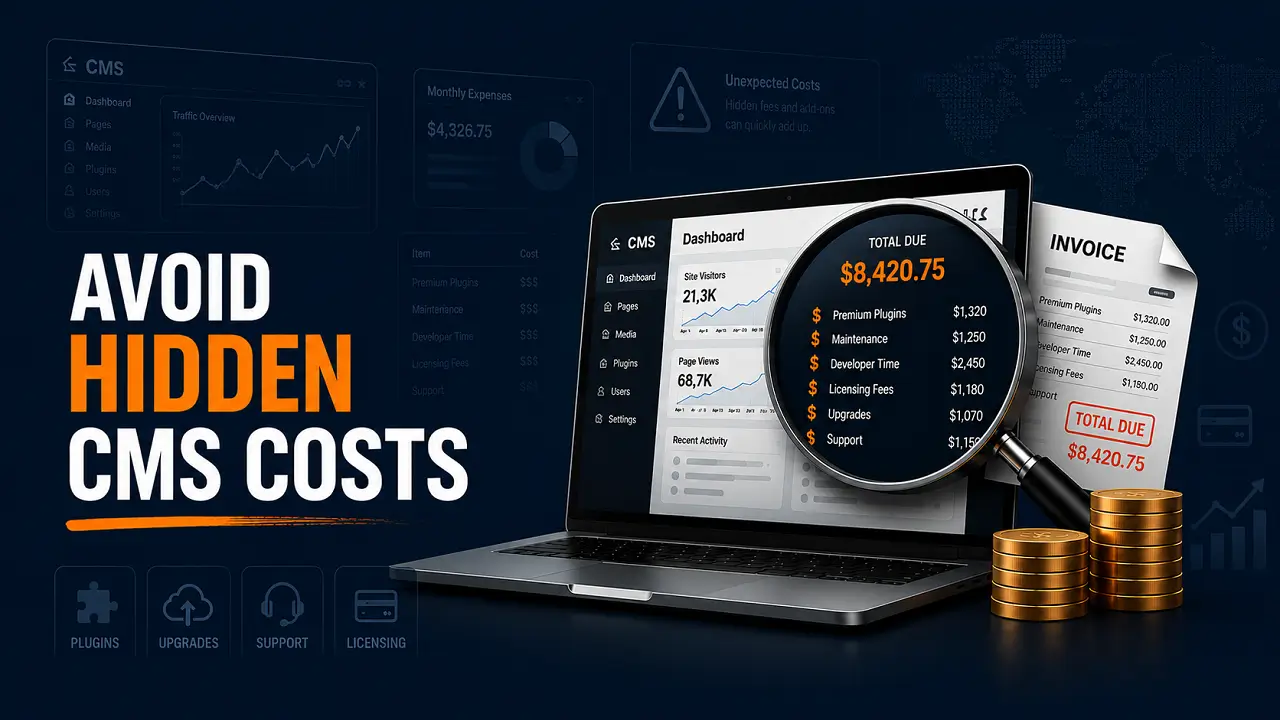
CMS pricing transparency goes beyond a single price list. It should be updated frequently and cover design, training, and additional tools. Teams can use it like a living map to identify hidden costs early and plan safer redesign budgets.
Hosting is often the most overlooked cost. CMS hosting can vary in terms of size and traffic. Some regions also change the domain hosting price. Teams must also include backup and CDN costs. These details show why careful review is always needed.
Reasonable budgets need more than price notes. Content management system features should match the team’s real work. CMS support also matters here. These checks reduce risk and prevent redesigns from exceeding both time and budget.
Teams should run audits and get owner approval. This keeps costs clear and open to everyone. With each review, choices get easier to trust. The next focus is asking the right questions to control total cost and avoid new risks.
Ask The Right Questions To Control Total Cost
CMS pricing transparency works best when tied to questions. Ask what is included, capped, or billed later. This shows real costs before you start. Teams can then plan clearly and reduce the risk of additional redesign costs.
Some questions are simple but key. Is CMS migration covered in the plan? What support hours are given? Do add-ons cost more? How does scaling change hosting? These prompts reveal weak points before any contracts are signed.
Clear answers guide better choices and cut redesign risks. A CMS software comparison keeps reviews fair and even. CMS support also ensures teams get help on time. With CMS pricing transparency added, teams can trust budgets and feel safer about future steps.
Teams should share one template for all vendors. Add questions, record answers, and compare results. This keeps choices simple and balanced. It also ensures that redesigns are kept on track.
Frequently Asked Questions
Which hosting details matter most when comparing CMS hosting plans?
When comparing plans, focus on storage, speed, and backups. Check if support is included, how often updates run, and what extra fees apply.
How should teams budget time and risk for a CMS migration during redesigns?
Teams should set a clear timeline with owners and backup steps. Simple notes on work time and risks keep projects safe and help prevent lengthy delays.
What affects the total domain hosting price across regions and traffic levels?
Traffic levels, site size, and location can change the final bill. Teams should check fees in advance to ensure their budgets are easily manageable.
How does the type of CMS shape editing, speed, and future upgrades?
Different systems handle content in various ways. Some make editing faster; others allow more design freedom. Pick one that matches the team’s skills and goals.
When do large sites benefit from staged Drupal migrations instead of one big move?
Large sites often gain from smaller moves done in steps. Breaking tasks down lowers risk, speeds reviews, and makes recovery easier.
Where does headless WordPress help reduce rework and vendor lock-in?
Headless setups split content from design. This enables teams to utilize a single source of data across multiple platforms. It helps you avoid getting tied to one vendor.
Conclusion
CMS pricing transparency makes costs clear and easy to plan. Teams see risks early and avoid rebuilds. With clear prices, redesigns stay on track. Budgets remain safe, and work moves forward without stress or late problems.
Plan small tests and note limits before you decide. Content management system features help cut extra steps and keep work simple. These steps guide safe planning and save time when sites grow.
Avoid Hidden Costs With CMS Pricing Transparency Today
Let The Strategic Tech guide your team to set clear goals and map real costs. We use CMS software comparison to find what works best. Run small tests, share results, and adjust with your team. With CMS pricing transparency, your redesign stays safe, simple, and on budget. Request your CMS design checklist now.